Embracing Change: The Shift from Joseph to Moses Leadership
Embracing Change: The Shift from Joseph to Moses Leadership
Introduction: Why This Conversation Matters Now
I believe we are living in a moment where what used to work no longer works the way it once did.
For years, decades even, many of us were leading inside systems that rewarded visibility, centralization, and institutional trust. Whether you were leading a church, a nonprofit, or a business, the environment itself carried momentum. If you showed up with competence, integrity, and a clear vision, the system often met you halfway.
But that world has changed.
What I’ve been naming in Apostolic Insight, and what so many leaders have been feeling but struggling to articulate, is this simple truth: we are no longer living in a Joseph era. We are stepping fully into a Moses era.
This isn’t about abandoning the gospel.
It isn’t about walking away from values or mission.
And it definitely isn’t about fear.
It’s about recognizing that the context has shifted, and leadership must shift with it.
What follows is my attempt to put language, clarity, and direction around what this moment is requiring of those of us who carry responsibility for people, vision, systems, and culture.
Understanding the Shift: From Favorable Systems to Faithful Leadership
I keep coming back to Exodus 1 because it frames this moment so clearly.
Joseph dies. A generation passes. And then Scripture says something that changes everything:
“There arose a new king over Egypt who did not know Joseph.”
That one line explains more about modern leadership tension than most strategy conversations ever will.
Joseph thrived in a season of favorable systems.
There was institutional trust.
There was a centralized authority.
There was cultural alignment.
There was receptivity to what he brought to the table.
And because of that, Joseph could operate with speed, clarity, and leverage.
Many of us were trained, and even found early success, under similar conditions.
If you were a strong communicator, you could grow something.
If you were competent and consistent, people trusted the institution.
If you built something meaningful, the environment supported it.
But Moses did not inherit that world.
Moses was called to lead in a completely different environment:
Hostility instead of favor
Distrust instead of assumed credibility
Scarcity instead of leverage
Complexity instead of simplicity
And this is where so many leaders are finding themselves today.
The tension we feel isn’t because leadership suddenly became hard.
Leadership has always been hard.
The tension is because the rules changed, and most of us weren’t given a new playbook.
The New Pharaoh We’re Leading Under
When I talk about a new Pharaoh, I’m not suggesting God has lost authority.
What I’m saying is that the environment no longer defaults in our favor.
And that reality shows up everywhere:
People are slower to trust.
Influence must be earned repeatedly.
Engagement no longer equals commitment.
Systems that once scaled easily now collapse under pressure.
This is true in churches.
It’s true in businesses.
It’s true in nonprofits, startups, and organizations of every kind.
The danger isn’t that leaders don’t see the change.
The danger is continuing to lead as if the context hasn’t shifted.
Joseph wasn’t wrong, but Moses couldn’t lead like Joseph.
Not because Joseph failed, but because the moment demanded something different.
Shift #1: From Masses to Ministry
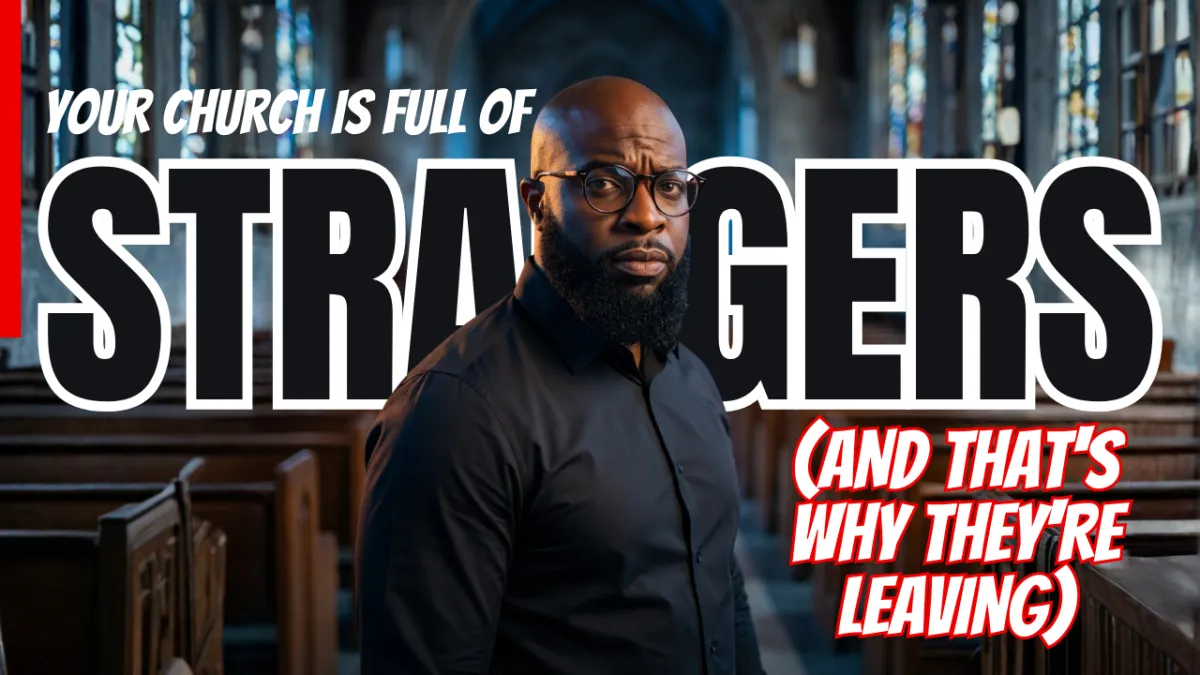
One of the first shifts I keep pressing into is the move from masses to ministry.
I often ask leaders a question that makes the room quiet:
If ten people left tomorrow, would anyone notice?
For a long time, growth came easier. And when growth comes easier, it’s tempting to confuse attendance with connection.
Crowds feel like confirmation.
Numbers feel like health.
But Moses-era leadership exposes how fragile that assumption really is.
Growth without care creates quiet exits.
People don’t always leave angry.
They leave unseen.
They thought they were joining a community.
They realized they were attending an event.
Ministry, real ministry, requires knowing people, not just counting them.
The Silent Exit Problem
One of the most dangerous realities leaders face today isn’t open conflict.
It’s silence.
People stop asking questions.
They stop pushing back.
They stop engaging.
And eventually, they stop showing up.
Not because they hate the leadership, but because they never felt known.
And this isn’t just a church issue.
In business and organizations, silent exits look like:
Teams are doing the minimum but losing heart
High turnover without clear explanations
Customers are disengaging without complaints
The absence of conflict is not the presence of health.
Moses-era leadership requires intentional systems for connection, feedback, development, and care.
Shift #2: From Attraction to Discipleship (and Development)
Let me be clear, attraction is not the enemy.
Attraction gets attention.
Discipleship builds endurance.
Or in broader leadership language:
Attraction brings people in.
Development helps them grow.
Formation helps them stay.
We live in a world where people can access:
Better content
Better teaching
Better inspiration
Anywhere, anytime.
What they can’t easily find is intentional formation.
Moses-era leaders don’t just gather people.
We shape people.
And shaping people requires:
Clear pathways
Repeatable systems
Intentional development
Shift #3: From Volunteers to Developed Leaders
This is one of the hardest but most necessary shifts I see in front of us.
We’ve become very good at recruiting helpers.
But we haven’t always been faithful at forming leaders.
Volunteers fill gaps.
Leaders multiply capacity.
Joseph could operate with centralized control because the system supported it.
Moses could not.
Leading people through trauma, transition, and uncertainty required shared capacity.
That’s why Exodus 18 matters so much to me.
Jethro looks at Moses and says plainly:
“What you are doing is not good.”
Not sinful.
Not unfaithful.
Not lazy.
Just unsustainable.
That’s where many leaders are right now.
Shift #4: From Centralized Control to Shared Capacity
Control feels safe, but control always becomes a container.
And whatever you put in a container will only grow as large as the container allows.
Organizations don’t stall because of a lack of vision.
They stall because one person becomes the bottleneck.
Shared capacity requires trust.
It requires training.
It requires systems.
And yes, it requires patience.
But it’s the only way Moses-era leadership survives.
Why Systems Matter More Than Ever
This is where church leadership and business leadership collide.
Good intentions don’t scale.
Charisma doesn’t multiply.
Systems do.
Follow-up systems build trust.
Development systems create leaders.
Operational systems prevent burnout.
The future belongs to leaders who are willing to build infrastructure, not just platforms.
What This Means for You Right Now
If you’re feeling the weight of leadership right now, let me say this clearly:
You are not failing.
You are not behind.
You are being invited to shift.
That’s exactly why we created:
The 21-Day Comeback Challenge
A guided reset designed to help leaders realign their thinking, release outdated agreements, and rebuild momentum for the season ahead.
Church Systems in a Box (CSB)
Built for church and ministry leaders who are ready to establish discipleship pathways, leadership development systems, and sustainable care structures.
Business Systems in a Box (BSB)
Built for founders, entrepreneurs, and organizational leaders who need operational clarity, delegation frameworks, and systems that scale without burning them out.
Full launch of the Business Systems: February 1st
This isn’t about doing more.
It’s about building wisely for the season we’re actually in.
Final Thought: Don’t Miss This Moment
Joseph prepared a nation for famine.
Moses formed a people for freedom.
Both were called by God.
Only one could lead in this season.
The question isn’t whether you’re called.
The question is whether you’re willing to shift how you lead.
This moment matters.
And I don’t want you to miss it.