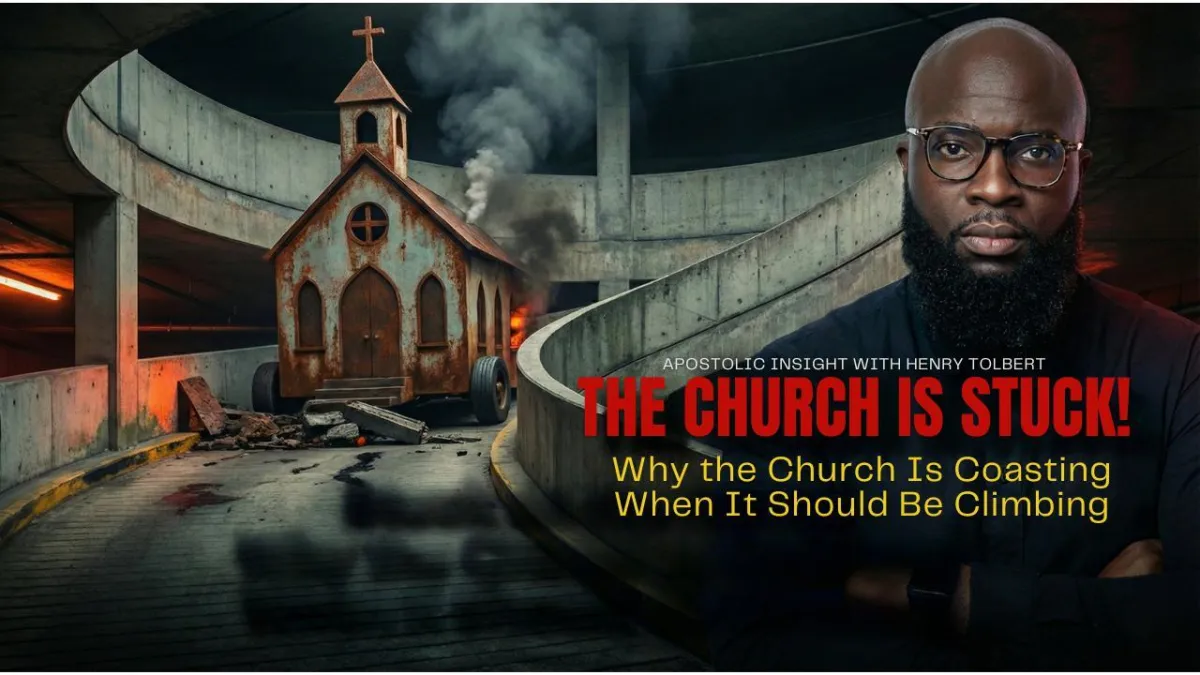
OVERCOMING APATHY: THE SIN WE DON’T PREACH ABOUT (AND WHY IT’S KILLING OUR CHURCHES)
OVERCOMING APATHY: THE SIN WE DON’T PREACH ABOUT (AND WHY IT’S KILLING OUR CHURCHES)
Let me say something most leaders are afraid to say out loud:
A lot of churches aren’t under attack.
They’re not being persecuted.
They’re not “going through a hard season.”
They’re just apathetic.
And apathy is far more dangerous than opposition.
Opposition makes you pray.
Apathy makes you coast.
Opposition forces clarity.
Apathy lets you hide behind busyness.
Most churches don’t shut down because of scandal.
They slowly bleed out because nobody cares enough to fight anymore.
And the scariest part?
You can be full, functioning, and still spiritually flatlined.
BUSY IS NOT THE SAME AS ALIVE
Here’s the lie we don’t confront:
“If we’re busy, we must be healthy.”
No.
Busy churches can be the most apathetic ones in the room.
You can have:
• A full calendar
• Consistent services
• Decent attendance
• Familiar routines
…and still be stuck.
Apathy doesn’t look like rebellion.
It looks like routine.
It’s the quiet decision to stop asking hard questions.
It’s choosing comfort over calling.
It’s confusing movement with momentum.
I’ve seen churches working nonstop while going absolutely nowhere.
That’s not faithfulness.
That’s wheel-spinning.
THERE IS NO NEUTRAL GEAR IN THE KINGDOM
Here’s the uncomfortable truth most leaders won’t admit:
Your church is either moving down, staying the same, or intentionally moving up.
There is no neutral.
Staying the same feels safe,
but it’s actually a slow decline.
Because culture never stands still.
People don’t stand still.
The mission doesn’t stand still.
If you’re not moving forward on purpose, you’re drifting backward by default.
GOING DOWN: REGRESSION WITH A SPIRITUAL EXPLANATION
Churches rarely say, “We’re choosing decline.”
Instead, they spiritualize it.
“We’re just simplifying.”
“We’re in a season of rest.”
“We’re protecting the people we still have.”
“We don’t want to push too hard.”
Translation? Avoidance.
This is where:
• Prayer meetings quietly disappear
• Outreach becomes inconvenient
• Standards get lowered to keep peace
• Conflict is avoided at all costs
• Leaders manage moods instead of mission
It’s not rebellion.
It’s erosion.
And erosion always feels reasonable while it’s happening.
STAYING THE SAME: THE MOST DANGEROUS OPTION
If going down is an obvious decline,
staying the same is the most deceptive trap.
Because it feels stable.
Attendance doesn’t crash.
Giving doesn’t collapse.
The lights stay on.
Sunday still happens.
But vision quietly dies.
Young leaders disengage.
Momentum leaks.
Passion fades.
Innovation stops.
You don’t lose people loudly.
You lose them quietly.
They don’t fight.
They drift.
And eventually, apathy becomes culture.
A church can look alive on the outside
and be completely numb on the inside.
Jesus had a name for that.
THE PATH UP: WHY MOST LEADERS AVOID IT
Going up costs something.
It costs:
• Comfort
• Familiarity
• Control
• Popularity
• Emotional energy
And that’s why many leaders don’t choose it.
Because going up requires:
• Honest assessment
• Courageous decisions
• Clear systems
• Strong leadership
• Renewed spiritual focus
You don’t drift upward.
You climb.
And climbing is exhausting if you don’t have a plan.
THIS IS WHY MOST COMEBACKS NEVER HAPPEN
Here’s what I’ve learned working with hundreds of churches and leaders:
Most pastors don’t need more inspiration.
They need structure.
They don’t lack passion.
They lack systems.
They don’t lack vision.
They lack a plan that can actually carry the vision.
That’s why people stay stuck.
Not because God isn’t moving,
but because the church isn’t built to move with Him.
Apathy thrives where there is no framework for obedience.
WHAT ACTUALLY BREAKS APATHY
Apathy doesn’t break because you preach harder.
It breaks because you lead differently.
It breaks when you:
• Face reality instead of avoiding it
• Rebuild prayer as fuel, not filler
• Stop managing Sundays and start shepherding people
• Put systems around what actually matters
• Hold leaders accountable to more than attendance
You don’t cast vision to fix apathy.
You build a structure that forces movement.
WHY I BUILT WHAT I BUILT
I didn’t create systems because I like operations.
I created them because I was tired of watching good churches die quietly.
That’s why we built Church Systems in a Box
for pastors who are done guessing and ready to rebuild connection, discipleship, follow-up, leadership pipelines, and care without burning out.
That’s why we created the Church Growth Accelerator
for leaders who know they can’t climb alone and need coaching, clarity, and accountability to move from survival to strength.
And that’s why I wrote The Comeback Plan.
Not as a theory.
Not as motivation.
But as a blueprint.
FINAL WORD
If your church feels tired, flat, or numb
That doesn’t make you a bad leader.
But ignoring it does.
Apathy doesn’t announce itself.
It slowly convinces you that
“This is just how things are now.”
It’s not.
Your best days don’t end because of culture.
They end when leaders stop climbing.
If you’re ready to move again:
• Get The Comeback Plan and rebuild with clarity
• Implement Church Systems in a Box so care, connection, and discipleship actually happen
• Join the Church Growth Accelerator if you’re done doing this alone
Because the church doesn’t need more busy leaders.
It needs brave ones.
And bravery always chooses up.