Stop Trying to Get People to Church. Take the Church to the People.
Stop Trying to Get People to Church. Take the Church to the People.
Why God's next move may not happen inside your sanctuary.
What if the biggest thing holding your church back isn't your preaching?
What if it isn't your worship?
What if it isn't your budget?
What if it's your model?
That's a hard question. But it's one many churches need to ask.
For decades, we built ministry around one assumption:
"If we build a great church, people will come."
That worked for a long time.
It doesn't work like it used to.
People aren't waiting for an invitation anymore. They're searching for community in coffee shops, coworking spaces, gyms, online groups, and neighborhoods.
The mission hasn't changed.
The map has.
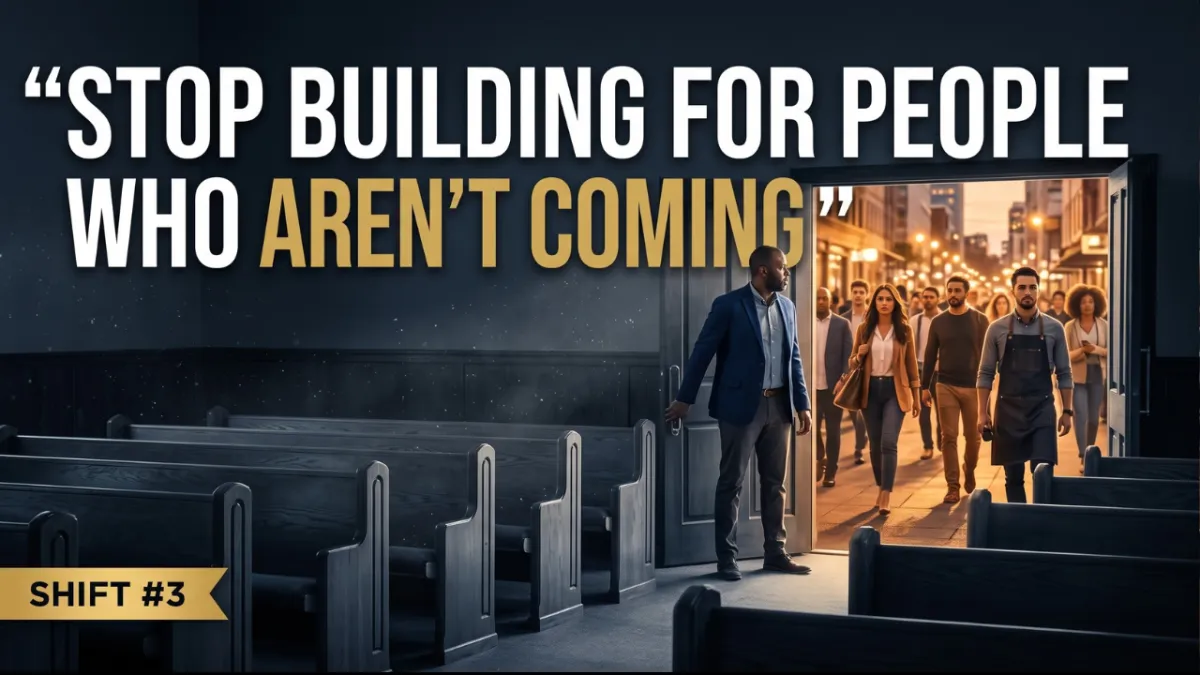
If we're serious about reaching people, we have to stop expecting the community to come to us and start taking the church to them.
The Building Was Never the Mission
Let's clear something up.
I'm not against church buildings.
I'm grateful for them.
But somewhere along the way, many churches started protecting buildings more than pursuing people.
Jesus didn't wait inside a synagogue hoping people would show up.
He walked the streets.
He sat at tables.
He met people where they already were.
The early church looked much the same.
The building has always been a tool.
The mission has always been people.
As Paul reminds us, "I have become all things to all people so that by all possible means I might save some." (1 Corinthians 9)
That's the heart of the Uncommon Church.
Your Community Isn't Waiting for Sunday
Here's the question I ask pastors.
Where do your people already gather?
Not where you wish they gathered.
Where are they today?
Maybe it's...
Coffee shops
Barbershops
Community centers
Coworking spaces
Apartment clubhouses
Local restaurants
Online communities
Those aren't obstacles.
They're opportunities.
Instead of spending thousands trying to convince people to visit your building, what if you simply showed up where they already feel comfortable?
Mission becomes much easier when you remove unnecessary barriers.
Stop Trying to Reach Everybody
One of the biggest mistakes churches make is trying to be everything for everyone.
That sounds loving.
But it usually creates confusion.
Healthy churches know exactly who they're called to serve.
Maybe God has called you to:
Young professionals
Single parents
Entrepreneurs
College students
Military families
Retirees
Creative professionals
When you know who you're called to reach, your message becomes clearer.
Your outreach becomes more intentional.
Your ministry becomes more effective.
You don't have to compete with every church in town.
You simply need to faithfully reach the people God assigned to you.
Technology Should Support Ministry - Not Replace It
Many pastors think they need more volunteers before they can grow.
Sometimes you don't.
Sometimes you need better systems.
Imagine if...
Every guest received a follow-up automatically.
Prayer requests were organized instead of lost.
Volunteers knew exactly where to serve.
Visitors received clear next steps without you texting everyone personally.
That's what systems do.
Systems don't replace relationships.
They create space for relationships.
When administration becomes simpler, pastors get back to doing what only pastors can do.
Shepherd people.
Ministry Is Becoming More Interactive
People don't just want another sermon.
They want connection.
They want conversation.
They want to belong before they believe everything.
That's why many growing churches are creating environments where people ask questions, participate, and build relationships—not just listen for an hour and leave.
The church has always been more than a weekly event.
It's a family.
Families talk together.
Five Ways to Start Becoming an Uncommon Church
You don't have to reinvent your ministry overnight.
Start small.
1. Pray for clarity.
Ask God one simple question:
"Who have You uniquely called us to reach?"
Without clarity, you'll chase every opportunity.
With clarity, you'll build intentional ministry.
2. Find your third place.
Where does your community naturally gather?
Go there.
Don't wait for them to find you.
3. Test before you launch.
Host a Bible study.
Lead a discussion.
Serve your neighborhood.
You don't need to announce a brand-new church to start making a difference.
4. Simplify your gatherings.
You don't need expensive lights.
You don't need a huge stage.
You need people.
Focus on relationships before production.
5. Build systems early.
Growth without systems creates chaos.
The earlier you build healthy systems, the easier growth becomes later.
That's one reason we teach churches to build systems before they desperately need them.
The Church Isn't Dying. It's Adapting.
Some leaders look around and see decline.
I see opportunity.
God has always used ordinary people willing to reach others in extraordinary ways.
The question isn't whether people are still hungry for God.
They are.
The question is whether we'll be willing to leave what's comfortable to meet them where they are.
The future doesn't belong to churches with the biggest buildings.
It belongs to churches with the clearest mission.
Because at the end of the day...
People matter more than buildings.
Mission matters more than methods.
And the Kingdom grows when we're willing to go.
Ready to Build a Church That Reaches People?
If you're tired of doing ministry the hard way and want practical systems that help your church grow without burning out your team, I'd love to help.
Join my FREE Church Growth Training, where I'll show you the simple systems growing churches are using to follow up with guests, develop leaders, and build healthy ministries.