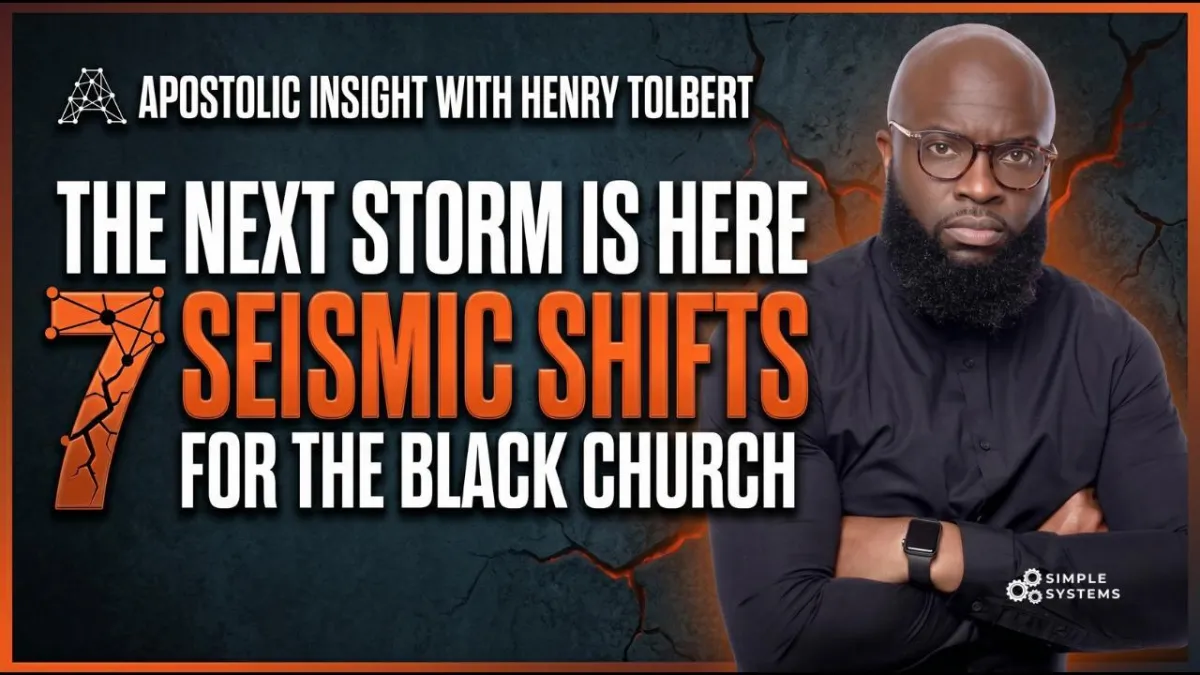
The Church Model That Built America Is Dying. Here's What Comes Next.
The Church Model That Built America Is Dying. Here's What Comes Next.
4,000 churches closed their doors last year.
Let that sink in.
Not 4,000 churches struggling.
Not 4,000 churches plateaued.
4,000 churches closed.
And if current trends continue, that number will only accelerate.
The uncomfortable truth is this:
The greatest threat facing the small church is not culture.
It's not politics.
It's not the economy.
It's not social media.
It's the belief that we can keep doing ministry the same way we've always done it and somehow get a different result.
The church is not losing because the Gospel stopped working.
The church is losing because many of our systems, structures, and strategies were built for a world that no longer exists.
And until we're willing to confront that reality, we'll continue to watch churches disappear.
But here's the good news:
Every shaking reveals what can survive it.
(Hebrews 12)
Let's talk about the shifts that are already reshaping the future of the church.
The Real Problem Isn't Attendance
Most pastors think attendance is the problem.
It isn't.
Attendance is the symptom.
The problem is deeper.
When attendance drops, giving declines.
When giving declines, ministries shrink.
When ministries shrink, leaders burn out.
When leaders burn out, churches struggle to survive.
Attendance is simply the warning light on the dashboard.
The engine issue is often underneath.
And that means we need more than another outreach event.
We need a new framework.
Shift #1: From Solo Heroes to Super Teams
One of the most dangerous ideas in modern ministry is the belief that the pastor must do everything.
Preach.
Counsel.
Lead.
Manage.
Market.
Fundraise.
Recruit.
Solve every problem.
Meanwhile, 82% of pastors are bivocational.
They're working one full-time job and then working another one at church.
No wonder leaders are exhausted.
The future church will not be built by superheroes.
It will be built by super teams.
Every thriving church understands something:
You don't build a church with the people you wish you had.
You build with the people you actually have.
That's why our P3 Framework starts with:
Playbook
Players
Performance
Most churches focus on performance.
Winning churches develop players.
Because healthy systems make ordinary people capable of extraordinary impact.
Shift #2: The Future Belongs to Churches That Can Merge
This might be controversial.
Good.
Some churches should stop trying to survive.
They should merge.
I know that sounds radical.
But let's be honest.
What glorifies God more?
A church struggling toward closure for five more years?
Or joining forces with another ministry so the mission continues?
Far too many churches spend years protecting a legacy while losing the future.
Sometimes the most spiritual thing a church can do is surrender its independence to preserve its impact.
A building sitting empty on Sunday doesn't honor God.
People who reached for Christ do.
Shift #3: Stop Worshipping Buildings
This one makes people nervous.
But it needs to be said.
A building is a tool. Not a trophy.
Too many pastors think the answer is:
"If we just had our own building..."
Meanwhile, I know pastors trapped by buildings.
The mortgage is crushing them.
Maintenance is draining them.
Utilities are suffocating them.
And ministry is suffering because all the money is tied up in real estate.
The early church changed the world without owning property.
They met in homes.
Courtyards.
Public spaces.
Anywhere people gathered.
Your church can thrive in:
Schools
Libraries
Community centers
Event spaces
Coffee shops
Movie theaters
Mission matters more than monuments.
Always.
Shift #4: The Rise of the Microchurch
Here's another unpopular opinion:
Not every church should become a megachurch.
Some churches are called to become deep churches.
The average small church often has one advantage that large churches struggle to replicate:
Relationships.
In a room of 20 people, everyone matters.
Everyone is seen.
Everyone is known.
Everyone can contribute.
That's powerful.
Success is not measured by crowd size.
Success is measured by transformed lives.
And sometimes smaller creates deeper transformation.
Shift #5: Digital Ministry Is No Longer Optional
Many churches still treat online ministry like a pandemic emergency plan.
It's not.
It's a mission field.
The question isn't:
"Should we be online?"
Your people already are.
The question is:
"Are we discipling them there?"
A livestream is not a digital strategy.
A Facebook page is not a digital strategy.
The future belongs to churches that build:
Digital guest follow-up
Online small groups
Digital discipleship pathways
Weekly communications systems
People don't stop needing ministry because they leave your building.
Shift #6: Pastors Must Stop Being Generalists
Pastors are trying to become experts at everything.
Preaching.
Websites.
Social media.
Leadership.
Finance.
Technology.
Assimilation.
Guest follow-up.
Fundraising.
And then we wonder why they're burned out.
You don't need to know everything.
You need to know who does.
The future church will leverage coaches, consultants, systems, and specialists.
Even Moses needed help.
(Exodus 18)
Stop trying to carry what God intended to be shared.
Shift #7: From Maintenance to Mission
This may be the biggest shift of all.
One statement from a webinar attendee stopped me in my tracks:
"Christians are no longer fishers of men. We have become guardians of the aquarium."
Whew.
That's heavy.
Somewhere along the way, the ministry stopped being about the Great Commission.
And became about the Great Maintenance Plan.
Keeping people happy.
Maintaining buildings.
Preserving traditions.
Protecting preferences.
Meanwhile, our communities are hurting.
People are struggling.
Families are breaking.
Young people are searching.
And churches are wondering why attendance is declining.
Here's a question every church should answer:
If your church closed tomorrow, would your city notice?
If the answer is no...
You may have found the problem.
The Future Church Solves Problems
The churches that thrive in the next decade will not simply hold services.
They will solve problems.
They'll address:
Homelessness
Food insecurity
Literacy
Re-entry programs
Youth development
Mental health support
Community violence
Not because they are abandoning the Gospel.
Because they're embodying it.
The church is uniquely positioned to solve civil problems with spiritual wisdom.
And when you solve real problems, something amazing happens:
People pay attention.
Cities partner with you.
Communities trust you.
Lives change.
A Hard Question Every Pastor Needs to Answer
What if the future of your church depends less on finding more people...
and more on becoming more useful?
What if growth isn't waiting on a better building?
A better logo?
A better website?
A better sermon series?
What if it's waiting on a church willing to meet a real need?
Your Next Step
You don't need all seven shifts today.
You need one.
Pick one area:
Build a stronger team.
Improve your systems.
Strengthen discipleship.
Rethink your space.
Develop future leaders.
Improve your digital presence.
Find a community problem to solve.
Then move.
Because churches rarely close because they lack potential.
They closed because they waited too long to adapt.
As Proverbs 29 reminds us, vision matters.
And the churches that survive this season won't be the biggest.
They'll be the churches willing to build for the future.
Ready to Stop the Leaks?
Save your seat for our free training here
The future isn't waiting. Neither should your church.